Wild Card: When cardboard gold meets real-world crime
Collectible card value and popularity lead to surge in theft, fraud
(InvestigateTV) — A $375,000 investment brought them together on a Tuesday afternoon at the height of the COVID-19 epidemic. A panel of influencers and money experts sat donning masks on a Dallas patio, as a remote audience of thousands watched online. The hosts called it a “historic event,” And when all was said and done, the day would surely live in infamy in the world of collectible trading cards — but for all the wrong reasons.
On that October 2020 afternoon, the group gathered to livestream the opening of what they believed was a first-edition box of Pokémon cards, purchased for that $375,000 price. But within seconds of the unsealing by prominent YouTuber @leonhart, there was an audible gasp and a stunning realization: This was not a first edition. It was a resealed box of miscellaneous, opened card packs worth a minute fraction of what they had paid.
“This is a major f**ing issue,” one of streamers said at the time.
The now viral incident lives on half a decade later as a stark reminder of a problem that’s grown tremendously along with collectible card popularity: As people seek investment opportunities or nostalgia in the collectible card space, they’re also at risk for major money losses due to fraud, fakes and theft.
A months-long InvestigateTV analysis of court records, news archives and an unofficial database tracking fake or stolen cards found cases of hard-to-detect counterfeit cards sold for thousands, brazen thieves stealing legitimate, high-dollar cards from local shops and high-profile conventions, and even thefts from the U.S. Mail,
‘How quickly the hobby has grown has definitely been a shock to me’
By the time Pokémon cards debuted for sale in the United States in 1999, trading cards were already an established collectible — with sports enthusiasts having busted open foil-covered packages in search of their favorite baseball players, basketball icons or football stars for decades.
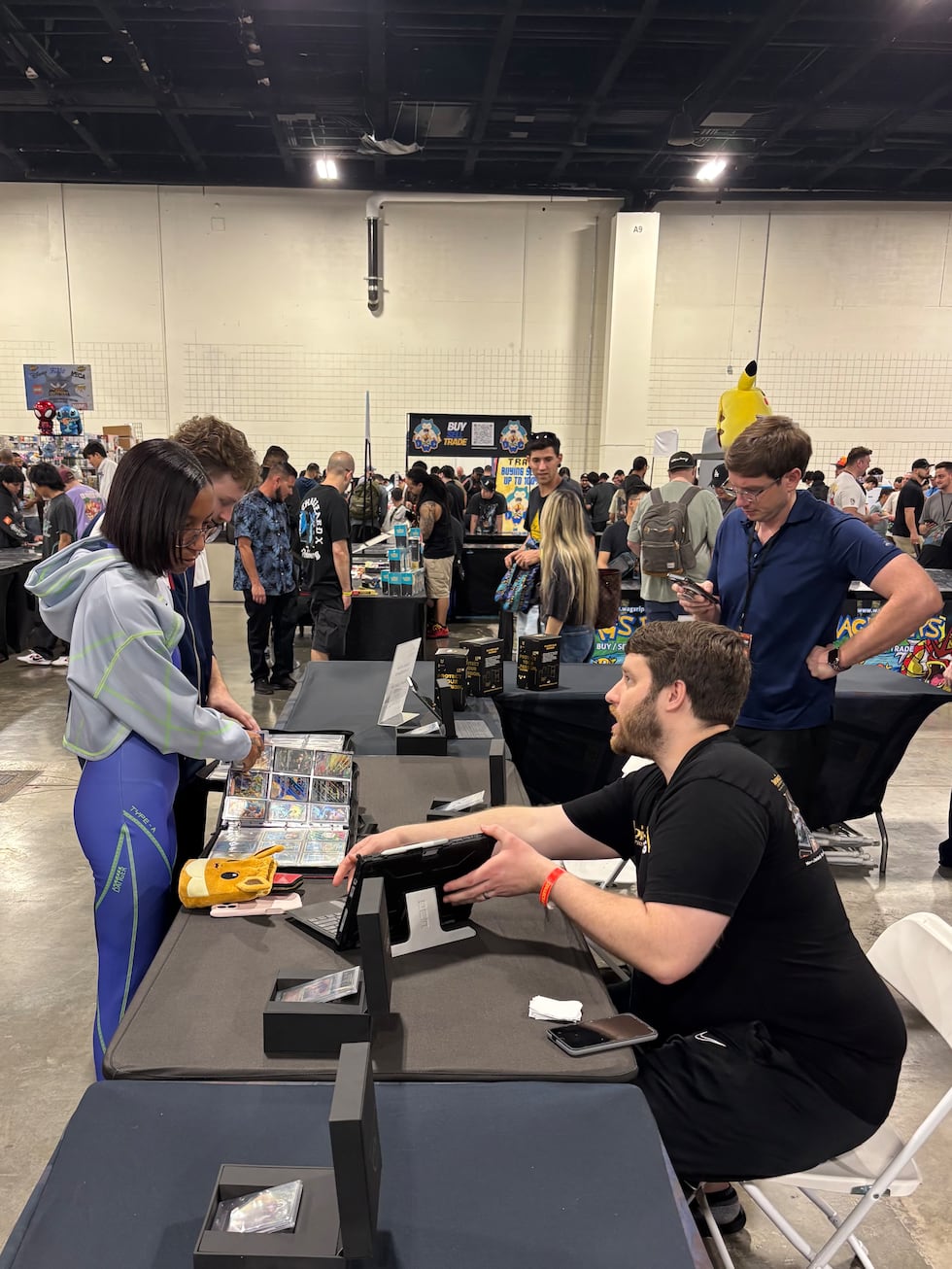
High-dollar cards certainly made headlines back then, but these days, card collecting has exploded as a hobby. Conventions like Collect-A-Con in Miami draw tens of thousands, with buyers, sellers and traders each chasing their own personal holy grail — and willing to lay down big money if they find it.
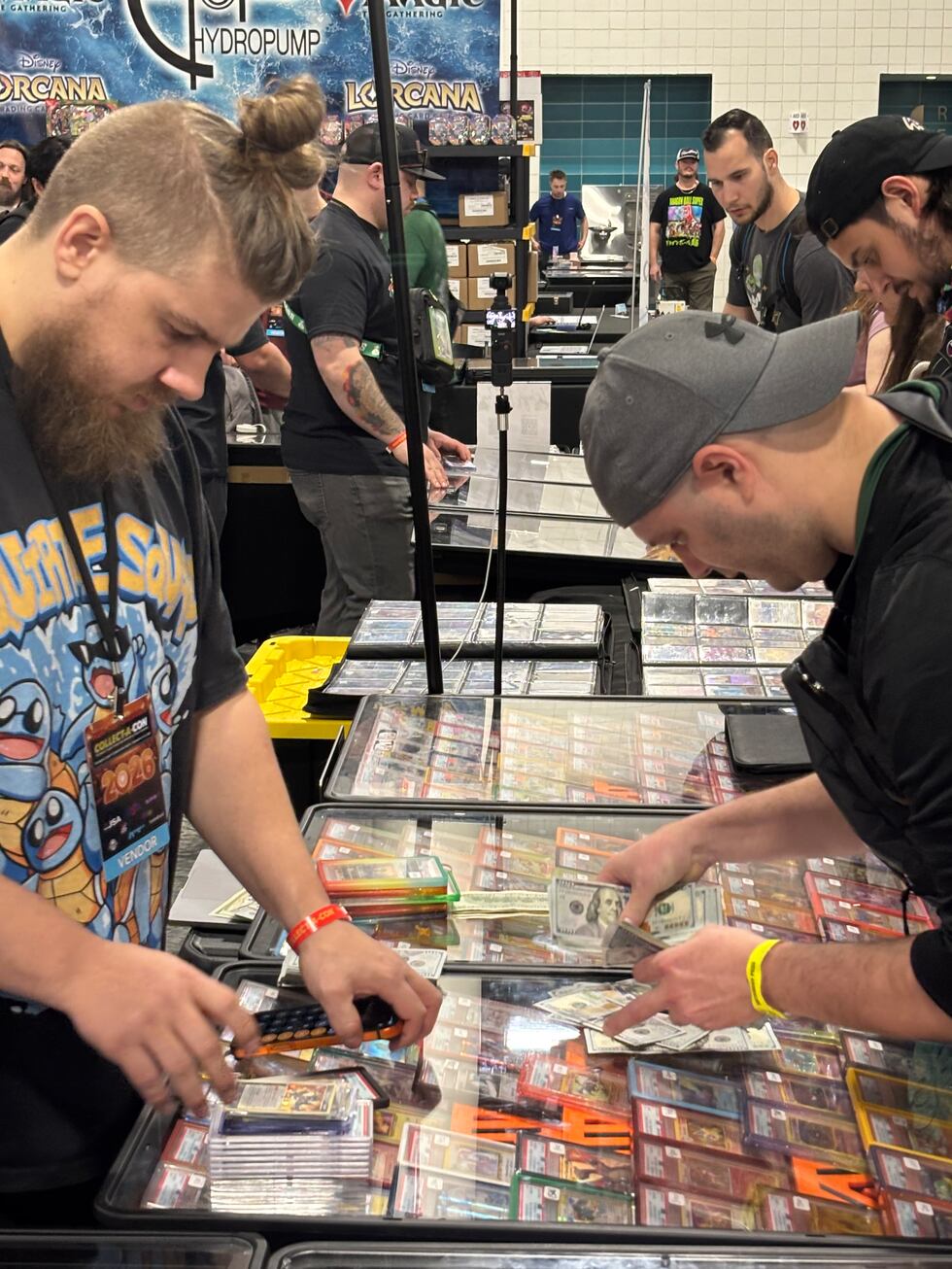
Collectors are no longer just looking for cards for sports celebrities like Shohei Ohtani or Patrick Mahomes. They’re also seeking stars from numerous fantasy worlds such as Pokémon’s Mega Charizard and Snorlax or Sol Ring cards from Magic the Gathering.
“It’s just something you get attached to them, you know. They become a little part of you,” Pokémon card collector Chris Gibson said. “They’re pieces of art. They’re collectibles. They’re things that people cherish, and nostalgia and stuff.”
But Gibson knows these cards can also be a source of cold hard cash.
“When I first started, I was just collecting them because I was like, ‘These are cool cards. I just want to have them,’ and then all of a sudden, they went like ten times up in price,” he said. “I bought a card for $200. All of a sudden, a year later it’s like over $2,000 for that card.”
Fake cards flood the collectible card marketplace
The growth in trading card popularity has created a robust opportunity for counterfeiters and other would-be fraudsters.
“The unfortunate thing is, as these cards get more and more expensive, you’re going to see more and more fakes that come out because people are just going to try and cheat,” said Richard Smith, an authenticator with Premier Card Grading, a global company that evaluates collectible cards and assigns grades related to their quality that impact their value.
Those grades, along with a card’s availability in the marketplace, help determine its value. At Collect-A-Con in Miami, InvestigateTV saw highly graded, rare Pokémon cards behind glass, with values topping $30,000.
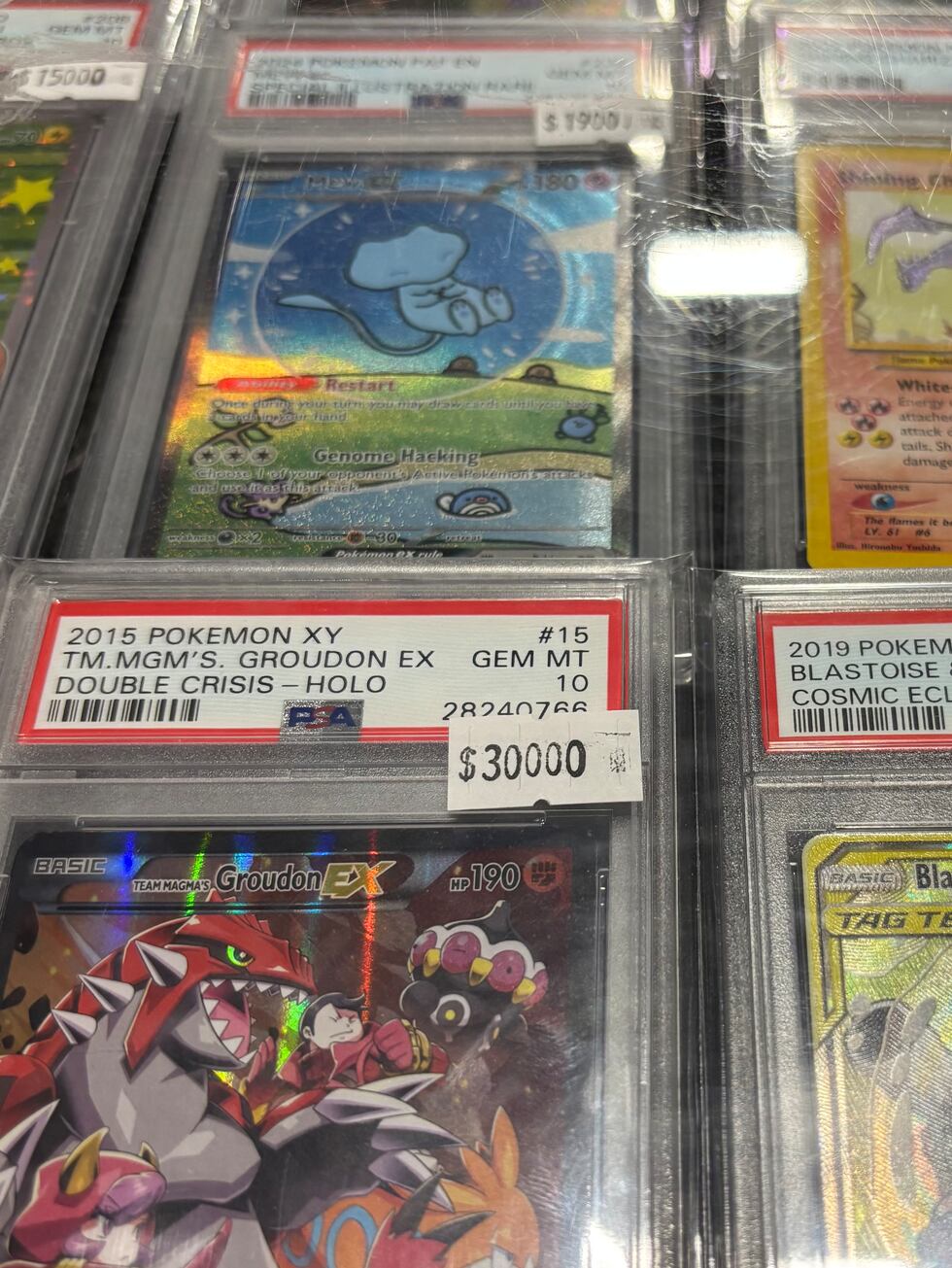
It’s Smith’s job to determine whether the cards that are submitted to his company are worth that kind of price tag.
“You can tell sometimes when the texture is off and you’re like, ‘Oh, that is not real’. And then when you drop in the microscope, you can look at the print dots and then like where the inking is and you can see, ‘Oh yeah, this is where the cardboard is off. Your ink is off here,” Smith said.
Feds crack down on card fraud, fakes
But InvestigateTV analysis of federal court records found fakes have been sold for large sums where customers didn’t have the expertise to spot the deceptions.
In January, two Washington men were convicted in a case that involved a multi-million-dollar scheme to defraud customers across the country. Court records say the pair spent years misrepresenting the grades of sports and Pokémon trading cards, selling them online and at auctions for hundreds of thousands of dollars when, prosecutors said, their value was a fraction of that amount.
There have been other high profile federal cases across the country:
- In Colorado an 82-year old man was charged and later pleaded guilty to defrauding collectors out of more than $800,000 by misrepresenting the authenticity of sports cards, including Michael Jordan rookie cards.
- In a Nebraska case, prosecutors claimed one counterfeiter sold supposedly rare sports cards featuring athletes like Mickey Mantle and Joe Namath. Collectors paid more than $100,000 for those cards even though their value was less than $10.
- The former owner of a Chicago auction house was sentenced to federal prison for a scheme that included selling an altered baseball card for more than $1 million.
“There’s nothing more frustrating to me when I see someone that has spent however many hours working at McDonald’s, JCPenney’s, their day job being a tax accountant, whatever they’re doing. And all that money was spent on that precious grail, and it was literally worthless because someone was an absolute jerk,” Smith said.
Brazen thefts of collectible cards cause damage, cost stores and collectors millions
Fraud isn’t the only crime with which collectible cards share a growing association. Theft has also become a massive problem from coast to coast. “Smash and grab” robbers, armed thieves and shoplifters have been caught on camera stealing from local shops, and authorities have uncovered organized theft operations at all levels of the memorabilia supply chain.
In January, video of a group of armed robbers shattering glass display cases in a New York City Pokémon store went viral. An employee there said thieves took more than $100,000 in merchandise as customers watched in disbelief.
In 2024, a Las Vegas comic book retailer was broken into twice in three weeks, with the owner saying thieves stole thousands in collectible cards and merchandise. And In December 2025, InvestigateTV affiliate WANF reported more than $100,000 in Pokémon cards were stolen from game shops across the Atlanta metro area.
In January of this year, an Anchorage man’s car was broken into and about $2,000 worth of Magic: The Gathering cards were taken.
While some are believed to be crimes of opportunity, federal officials have also prosecuted multi-state crime rings where thieves targeted numerous retail stores before attempting to sell the stolen cards online.
Even trade shows are vulnerable — at one Dallas convention in 2024, more than 100 high value baseball cards were stolen, sending approximately $2 million worth of sports history into the wind.
One company, Tiffany Cards, has created an unofficial online database that publicizes stolen cards along with cards that have been altered, mis-graded, mislabeled or counterfeited, making sure collectors are aware.
InvestigateTV analyzed the company’s data, finding more than 300 reported stolen on the site since 2020. Many were reportedly taken from stores or homes, with dozens more allegedly yanked right out of the mail. Of the cards reported stolen in the database, 50 are alleged to be mail or delivery related — thefts victims say occurred in transit, at post offices or even directly from mailboxes.
Federal cases reviewed by InvestigateTV detail numerous instances where employees of the United States Postal Service were charged after customers complained about missing items and open or rifled-through packages:
- A Massachusetts postal employee pleaded guilty to stealing 23 sports trading cards valued at $68,668.
- A mail carrier in Kansas City pleaded guilty to stealing nearly 100 sports cards worth a total of $39,994.
- A New York postal worker pleaded guilty to stealing mail, including trading cards, after evidence was found by the USPS Office of Inspector General.
“I do hope that karma one day comes and bites them in the rear,” Smith said of those seeking ill-gotten gains and taking advantage of the excitement surrounding the hobby.
Experts like Smith said the news of robberies and thefts travels quickly, with the community often jumping into action to prevent criminals from profiting from what they’ve taken.
“Whenever someone does get robbed or stolen from, basically everyone is like ok, this is what’s missing. This is where it is, this is what it looks like. I have photos of it. This is where the dent on the box is. Like anything that’s expensive or isolated or special, it’s very, very difficult to move,” Smith said.
Still, reuniting cards with their original owners is rare, though it does happen.
In February, a Pokémon card stolen from a teenage collector at a card show in Green Bay found its way back after the teen approached one of the vendors, who happened to also be a producer at InvestigateTV affiliate station WBAY.
The vendor alerted other dealers at the show about the card, and shortly after was approached by an individual who said they believed they had purchased the card from someone who had stolen it.
After finding the teen on social media, the vendor was able to connect with the family and return the card, which valued at $150-$200.
The fervor around trading cards — and the significant financial gains and losses the industry represents — has even reached Capitol Hill, with one member of Congress calling on the Federal Trade Commission to investigate the recent consolidation of several major grading companies.
“Kids, collectors and local card stores shouldn’t have to worry that the system is stacked against them, and the FTC needs to step in before this hobby is controlled by one powerful company,” Rep. Pat Ryan of New York said in a December 2025 press release.
Meanwhile, card buyers, sellers and traders play on — arguably gambling on the legitimacy of every card or pack.
For collectors like Chris Gibson, who attended the Miami collecting convention, Mega Charizard could be a retirement plan.
Or maybe it’s just a piece of magic worth holding onto.
“This card is $1,900 now. But in the future, it could be worth more. Sometimes it could be worth less. You never know,” he said. “For me, personally, it’s just a card that I like, I enjoy. So that’s what matters to me.”
Copyright 2026 Gray Media Group, Inc. All Rights Reserved.