Broken Promise: Federal staffing cuts delay medical care for 9/11 survivors still battling health issues
Survivors say slow processing affects access to medical care and treatment for illnesses linked to attacks
(InvestigateTV) — Tim Casey returned to Ground Zero for the first time since the horrific attack on America in 2001 when fire, debris and steel girders rained down in and around him that Sept. 11.
This time, though, he came not as a healthy worker from New Jersey headed to his office but as a cancer patient battling for his life and for promises made by the federal government to “Never Forget.”
But federal staffing cuts made by the Department of Government Efficiency, or DOGE, have hollowed out that solemn promise for 9/11 survivors.
The processing of claims has slowed, leading to delays in medical screening and treatment for those battling health issues associated with the attacks 25 years ago.
Congress now has promised that staff will be returned to the program dedicated to 9/11 survivors.
But it will take time for the program to ramp back up to full speed as it faces a backlog created by nearly 18 months of understaffing.
During that time, survivors suffered, critics told InvestigateTV.
“’Never forget’ is a watered-down slogan now. It’s commercialized,” said John Feal, founder of the FealGood Foundation, an organization to help assist 9/11 survivors and volunteers.
Survivors have been let down by the federal government, he said.
“A lot of them are going to come to Ground Zero on the anniversary of 9/11 and stand there on that solemn day and it’s disingenuous,” he said, “It’s an insult to those who lost a loved one. It’s an insult to those who lost a loved one on that day, and it’s an insult to those who are suffering.”
A day America promised to “Never Forget”
In Annapolis, Maryland, Tim Casey sifts through an old album. Inside of the album are images of the burning twin towers, taken on September 11, 2001 from New Jersey, across the Hudson river.
Casey was on the last PATH train into the World Trade Center on September 11th.
“As I walked out the door, pieces of paper on fire came down in front of me. It was surreal,” Casey said.
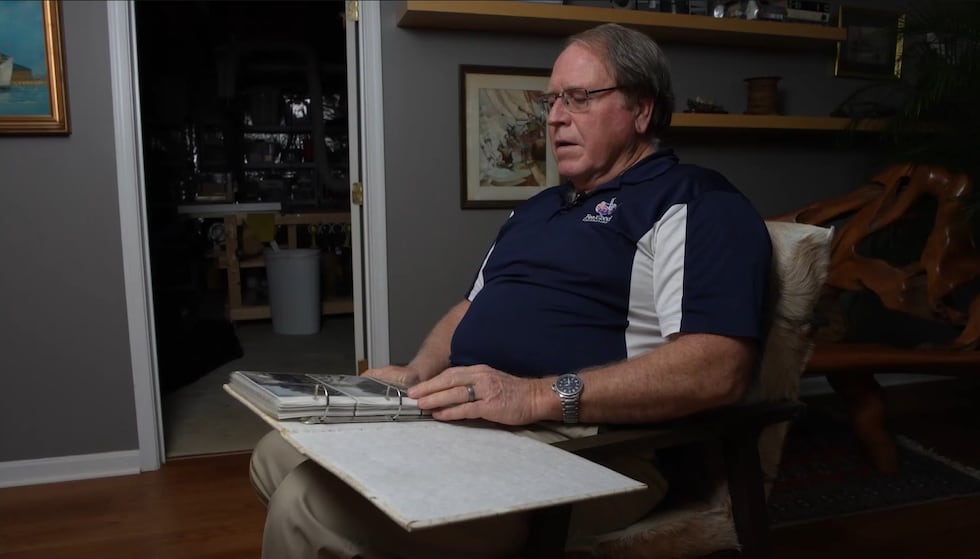
The September 11 attacks took the lives of nearly 3,000 people in New York, Washington D.C. and Pennsylvania.
Casey remembers the day vividly. He noticed a policeman talking into his radio and smelling diesel fuel, thinking it was strange.
“I walked around the building towards the second tower. The second plane came through the building from the other side,” Casey said. “And as I looked back up, I noticed that there were what appeared to be match sticks over my head. And it finally did compute that they weren’t match sticks, they were actually girders and steel beams and so on, and at that point, I started running.”
Casey ran from the Twin Towers and eventually made his way back to New Jersey across the Hudson River.
“Surreal is probably the best way to describe it. You really can’t fathom what’s happening,” Casey said.
Cancer diagnosis
Those who lived and worked nearby tried their best to move forward after that day. But 17 years after September 11th in 2018, the debris and dust cloud that had seared into Casey’s memory reared its head again, this time within his body in the form of cancer.
It first started when Casey said doctors noticed a spot on his lung.
“While I was on the table, they did the pathology and found I had lung cancer, adenocarcinoma. And at that time, they removed my upper left lobe and 22 lymph nodes all while I was under. So, it was like a four-hour procedure,” Casey said. “In the meantime, my poor wife is sitting there. It was a very traumatic thing.”
Casey knew the toxins of 9/11 were to blame. He contacted the law firm Barasch and McGarry and asked them if they’d take the case.
“It turned out it was a very common one of the most common lung cancers that came out of 9/11,” Casey said.
Doctors say peak of illnesses from 9/11 may not have arrived yet
At Mount Sinai Hospital in New York City, Dr. Munir Ghesani and Dr. Raja Flores help treat patients with 9/11 related illnesses. For them it’s not just a job, it’s personal. Both remember where they were on September 11.
“When those towers went down, a piece of me went down with it. I used to work there during college. I delivered through the whole Twin Towers area downtown, all that surrounding area. And a kid that I went to high school with died in the Twin Towers. So, this is personal. It’s not just me taking care of patients,” said Flores, Chairman of Thoracic Surgery at Mount Sinai.
Dr. Ghesani, faculty in Nuclear Medicine and Neurosurgery at Mount Sinai, recalls when the harsh reality of the attacks and the very slim chances of anyone making it out alive became real.
“I had to make a long walk along the west side of New York, all the way to Chelsea Piers. And I went there and naively mentioned to them, I said, ‘I would like to help those who may have injury or something. I have an internal medicine background as well,’” said Ghesani, “And what they told me was that, well, unfortunately people either made it or did not make it. So, there is no survivor here at Ground Zero at Chelsea Piers.”
In the years following the terrorist attacks, both doctors have treated patients with 9/11 related illnesses.
“I’ll see patients who have cancers from 9/11 exposure, specific to asbestos and whatever else was in that pulverized dust,” Flores said. “So, I can see patients with lung cancer. I’ve seen a couple of patients with mesothelioma.”
Flores also described patients would have “the more benign things.”
“Those are cancers, but then you have sarcoidosis, which even though it’s benign, it can affect you,” Flores said.
Nearly a quarter of a century later, Flores said it’s not uncommon for people to now notice the health effects from the dust cloud.
“I think we have not seen the peak yet. I think it should be coming up soon. And what’s important is when we screen these patients,” Flores said, “and hopefully we can catch these cancers early when we can cure them. ”
Ghesani and Flores say nuclear medicine has made a huge difference in treating survivors and patients. Ghesani showed InvestigateTV images of patients they’ve treated. Technology is now becoming more sophisticated for detecting images they could not see even 15 years ago.
For those who volunteered and worked at Ground Zero or were caught in the dust cloud, Ghesani and Flores both say they should pay attention to these things: a persistent cough that isn’t going away, blood in phlegm, or adult-onset asthma.
Those are clues that screening is needed.
World Trade Center Health Program Enrollment grows as staffing decreases
Since the attacks, 9/11 related illnesses have continued to increase.
The World Trade Center Health Program is administered by the National Institute for Occupational Safety and Health (NIOSH).
According to the program’s website, it serves over 125,000 first responders and survivors from across the country by providing medical monitoring and treatment for 9/11 related health conditions.
Enrollment and certifications have steadily climbed over the past five years, with enrollees coming from multiple states including the Carolinas, Georgia, Florida, New York, New Jersey and Virginia.
However, those close to 9/11 survivors say they’re not getting the care they need on time.
Attorney Michael Barasch represented nearly 50,000 people in the 9/11 community in the years following the attacks. He said he’s watched the numbers of enrollees climb while staffing decreased.
“Now the health program is fully funded, which is great. And you would think, well, now we can just represent our clients, and we don’t have to lobby anymore,” Barasch said. “So, when Mr. [Elon] Musk came into power when Mr. Trump was inaugurated—he just like a blowtorch—cut the health program and many, many other agencies by 20%, not realizing how this was going to have a real-life impact on people’s lives.”
Publicly available data does not show how long patients wait for certifications, something that worries 9/11 survivor advocates.
Certification is an official decision by the WTC Health Program that a person’s condition is related to 9/11 exposure and meets criteria.
Covered conditions include acute traumatic injuries such as burns, airway and digestive disorders, multiple types of cancer and mental health conditions such as PTSD.
For responders, it can also include musculoskeletal disorders such as back pain.
Those who volunteered to assist in cleaning Ground Zero following the attacks know the sacrifices made in the months and years after. Many are suffering illnesses today and are fighting for the rights and health of those impacted.
John Feal, of the Feal Foundation, is among them
Feal was injured when around 8,000 pounds of steel crushed his foot. He spent 11 weeks in the hospital with gangrene and had to have half of his left foot amputated.
Working alongside celebrities like comedian Jon Stewart, Feal has traveled from New York to Capitol Hill dozens of times over the past 20 years, fighting for healthcare, research and funding. Feal said grant funding and research should be a big priority for federal health officials and Congress.
“We need to fix the grant freeze, because every year, the FDNY and the scientists at the World Trade Center Health Program and NIOSH were doing studies. In March of last year, we had heart and autoimmune on the table to be announced that they were going to be added . . .They’re now taken off the table,” Feal said.
Lawmakers and advocates press HHS on staffing
In a Senate committee hearing this year, New Jersey Sen. Andy Kim pressed Health Secretary Robert F. Kennedy Jr. about staffing for the program without receiving assurances of a full return to service.
“Were you unaware or were you aware that the decision to cut NIOSH staff would cut that World Trade Center health program?” Kim said.
“Well, you know, my agency is the biggest agency in the government. It’s twice the size of the Pentagon. It represents about 20% of the U.S. economy. We have hundreds of institutes and sub agencies. We try to be as careful as we can about what we cut and what we didn’t. We made a couple of mistakes,” Kennedy said. “That program will continue. There will be continuity in that program. Yes.”
“Yes, but at full strength of where it was before you were secretary?” Kim said.
“The program itself will continue,” Kennedy said.
In April, lawmakers announced the World Trade Center Health Program has now been approved to fully staff up to 120 positions, adding 37 roles that will directly support the responders and survivors who rely on this care.
But advocates say questions remain about the timeline of these hirings and what the certification process will look like for patients.
InvestigateTV spoke with U.S. Sen. Kirsten Gillibrand (D-New York) in an interview. The senator has been speaking with the 9/11 community for over 20 years and has been pushing for increased staffing. She said she is worried about what a backlog will mean for those trying to get care.
“Secretary Kennedy promised to meet the needs of this program, and we’re going to hold him to it,” Gillibrand said. “They tell you it’s going to be fixed, but then they don’t do it. So, we are going to be on them to make sure they’re not lying. ”
HHS has been publicly silent about the hiring rollout and process.
“We are desperately short of good nurses and doctors who can expedite the administration that needs to be done, who can get people in for an appointment and get their cancers certified so that they can get the treatment that they want, they can get the co-pays and deductibles paid if they want to stay with their private doctors,” Barasch said.
Barasch and advocates are also concerned about lack of communication between the program and 9/11 community, as well as petitions to add cardiac, auto immune and cognitive issues to the list of covered conditions.
For months, InvestigateTV asked for an on-camera interview with Kennedy. The team also asked for numbers from HHS related to staffing trends over the last five years, how many staff members were terminated, how many were re-hired, and for the average wait time for patients to be certified and processed.
HHS did not provide any of the requested information, instead writing:
“HHS remains committed to the critical programs that serve hardworking Americans across the nation, including 9/11 responders and survivors. The World Trade Center (WTC) Health Program’s Clinical Centers of Excellence and Nationwide Provider Network are continuing to provide services to Program members at this time. The Program continues to accept and review new enrollment applications and certification requests.”
Returning to Ground Zero, 25 years later
In New York City, the 9/11 Museum and plaza lists the names of those lost at Ground Zero that day. Every name is carved out for visitors to pay their respects. And on those same grounds, a marking and rocks honor those who died from illnesses in the years following the attacks.
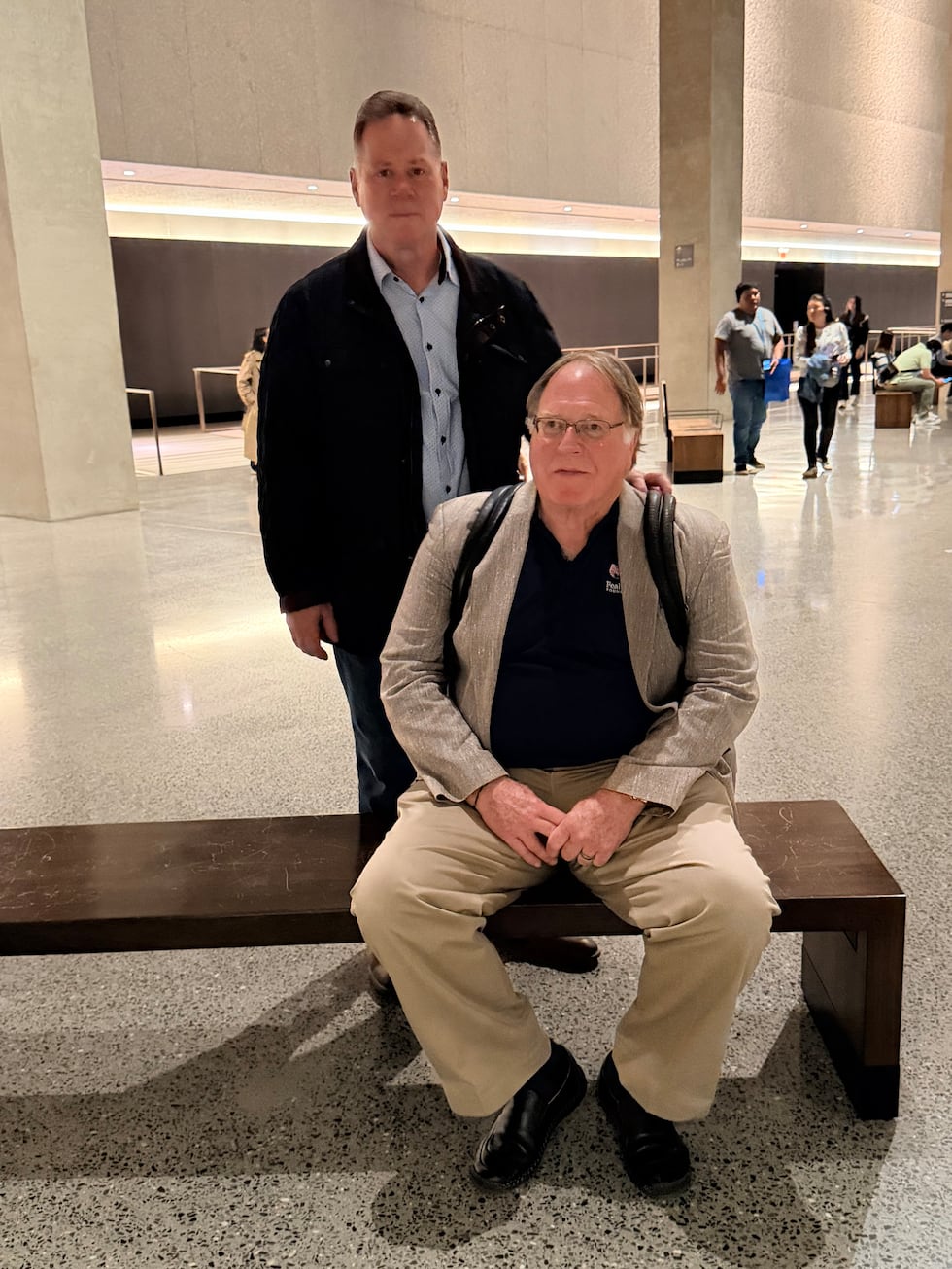
This spring was the first time Casey returned to Ground Zero in 25 years.
To honor their memory, to remember those who died years after the attacks, and for those still struggling to get the health care they need, Casey continues to fight and more importantly to remember.
“Why do we have to keep going back as sick people to fight for it? Do the right thing,” Casey said. “Never forget and do the right thing.”
Copyright 2026 Gray Media Group, Inc. All Rights Reserved.