No Guarantee: Homeowners’ reliance on home warranties may end in broken expectations
Thousands of consumers have complained about the industry, with some calling for tighter regulation
BATON ROUGE, La. (InvestigateTV) — When Michael Austin purchased his home, it came with what he viewed as a security blanket — a home warranty.
Home warranties often are popular incentives for homebuyers because they are marketed as protection for when major appliances, heating and cooling systems, water heaters and other big-ticket items break.
But for many homeowners like Austin, that protection against costly repairs often comes with hitches and glitches tucked into the fine print of the home warranty contracts.
Even after the first contract expired, Austin decided to keep renewing the home warranty through American Home Shield after receiving exceptional service. The company paid Austin’s claims for a broken garage door opener and a malfunctioning oven.
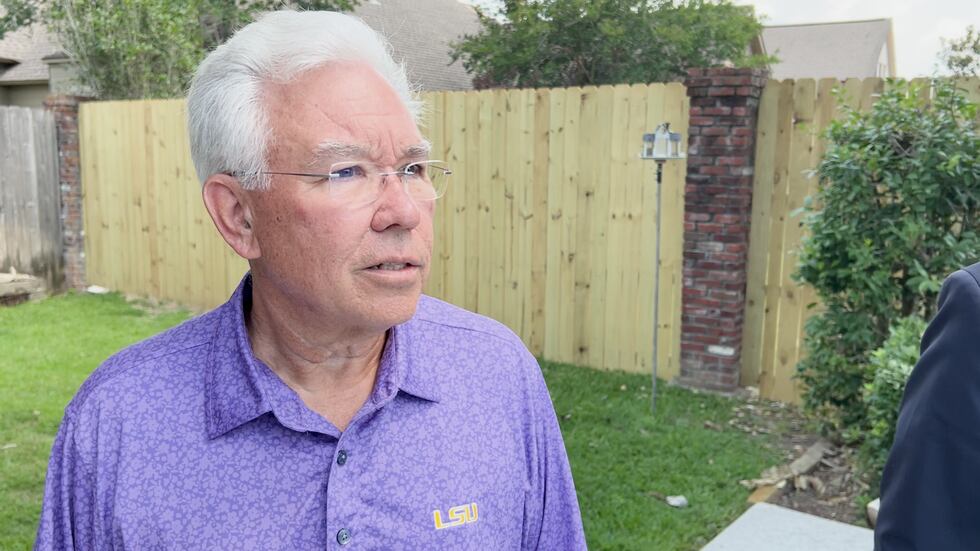
For him, he said it was a convenience worth the annual renewal fee — nearly $2,500 in August 2024.
“You didn’t have to go look in the phone book or the internet to try to search out contractors,” he said.
But last year, in the midst of the sweltering South Louisiana summer, Austin’s air conditioner broke and soon after, so did his faith in that home warranty.
“It’s just been a nightmare,” he said, adding that he’s spent more than 100 hours on the phone trying to resolve his claim.
He’s also come to learn that his situation is not unique.
Thousands of consumers have filed complaints against home warranty companies since 2019, according to an InvestigateTV analysis of reports filed with the Federal Trade Commission, 25 state regulators and the Better Business Bureau.
In Texas, for example, more than 1,500 consumers filed complaints against home warranty companies with the state’s attorney general. In Tennessee, InvestigateTV found more than 800 such complaints, as well as nearly 700 in Illinois.
A consumer in Connecticut wrote to state regulators that her home warranty company wouldn’t replace her air conditioner until she first paid for an expensive repair.
In Idaho, a consumer complained about a denial for an A/C repair until the homeowner paid for a second opinion.
According to a complaint made by a consumer in South Carolina, a home warranty company refused to pay for the full cost of replacing a broken stove, but instead offered the consumer a $338 Lowe’s gift card — hardly putting a dent in the $6,000 replacement cost, the consumer wrote.
“It’s a really weird kind of wild, Wild West kind of . . . arena because it’s not technically insurance. It’s not heavily regulated,” said Franz Borghardt, a Louisiana attorney with decades of experience in criminal and civil law. “It’s a David and Goliath scenario.”
Complaints against companies flourish online
Austin said he felt reassured each year that he paid the annual protection fee, which over the years has grown from $700 to more than $2,400.
“We kept the home warranty, because we didn’t want to worry about mechanical breakdowns, air conditioners, water heaters, whatever the case may be,” Austin said.
However, that worry-free belief faded when his A/C broke.
He said American Home Shield arranged and paid for a repairman to replace the condenser and evaporator coil, but a month later, the system broke again.
He called the home warranty company a second time for another repair.

That time, the company refused to cover the nearly $4,400 repair. Instead, Austin said American Home Shield only offered him $560.55 toward the repair.
“They were only willing to pay $500 of the total bill,” he said. “So, that’s when the major problem started. That was the main issue. I started researching online complaints about the company.”
Austin took to social media and found online groups with thousands of members sharing their complaints against home warranty companies.
He said he was furious and felt “duped,” and said he began filing his own complaints with the Louisiana Attorney General’s Office, Federal Trade Commission and the Better Business Bureau.
Many states and the Better Business Bureau will act as mediators between companies and unsatisfied consumers, giving each side a chance to explain the problem.
“It behooves a company to answer a BBB complaint because their letter grade will go down if they choose to ignore that complaint,” said Melanie McGovern, spokeswoman for the national organization.
McGovern said that the BBB vets every complaint it receives.
“We always tell consumers, ‘Try to work it out with the company first,’” she said. “If you can’t get a resolution or if you think that you deserve a resolution, the best thing to do is come to the BBB website, file that complaint, make sure you have substantiation. Any contracts receipts, documents that you may have signed, emails, text messages, anything like that also goes into the complaint.”

The BBB then will take the complaint to the company for its response. They have 14 days to answer.
She said that in many cases, the back and forth between the consumer and a specific company often results in a resolution that is acceptable to both sides.
When that process is completed, the complaint is added to the BBB’s complaint database, which is posted online with a notation of the outcome.
McGovern said a little homework before signing a home warranty contract can likely avoid problems when the oven quits working.
“Ask a ton of questions. Come with a list of items in your home. ‘Is my refrigerator covered? Is my dishwasher covered? Is my sump pump covered?’ You want to ask a lot of questions,” she said.
She also said to look for red flags and to be willing to walk away “if the company is evasive, if they’re not giving you details, if they’re forcing you to sign right away - you’re going to lose this great rate.”
Loose regulation and pages of fine print can lead to problems
Austin said that he received varying answers from the company about why it would not cover the full cost of repairs.
He only learned the company’s detailed reason for denial from a letter written to the Louisiana attorney general’s office from American Home Shield.
Attorneys general are often the state entity that will mediate disputes between consumers and businesses.
A claim resolution specialist for American Home Shield wrote to Louisiana regulators that the company wasn’t obligated to cover the repair because Austin’s “plan agreement does not provide any coverage for any modification to any item that is not identified as a covered item in the plan summary.”
Nonetheless, not long after, American Home Shield returned with a new and final offer after Austin filed complaints about the company.
He received a check for $2,400 — still far short of his out-of-pocket costs to fix his air conditioner.
The offer Austin received also came with a catch written onto the check: “By cashing this check, you acknowledge that we have fulfilled your service request for the applicable covered item.”
Austin said he has been sitting on that check for months as he continues pushing for a full refund.
“I don’t think the average person has the wherewithal or the knowledge to go after a large corporate entity that says, ‘We’re not going to do anything,’” Austin said. “It’s all about the principle. It’s what’s right. American Home Shield uses some vague language to avoid paying claims.”
American Home Shield did not respond to InvestigateTV’s request for comment for this story.

Borghardt, the lawyer, said the fine print in these types of home warranty contracts can sometimes be cumbersome and confusing.
“Is it a security blanket or is it a bag of magical beans that really doesn’t do what it’s supposed to do?” Borghardt said.
Austin’s contract, for example, includes nine pages of fine print.
There is no federal regulation or law that governs the industry. At the state level, it’s a patchwork of oversight.
Forty-three states have a law specific to home warranty companies, but the regulations vary widely, ranging from some states that only require home warranty companies register to others that oversee consumer contract terms.
Every state, however, has a law for deceptive sales practices, and some state regulators have used that law to go after rogue home warranty companies.
In Ohio, where there is no specific law for home warranty companies, the attorney general filed lawsuits in 2023 and 2024 against companies for violating the state’s deceptive sales act because the companies rarely paid the consumers’ claims.
Since 2019, at least eight other states have taken action, according to InvestigateTV’s research.
California, Oklahoma, Pennsylvania and Washington each have issued cease and desist orders against companies for not paying for repair claims.
Earlier this year, Georgia banned a company from doing business in the state. The company has a history of not paying claims across the country.
In Minnesota, the state reached a $3.5 million settlement with a real estate agent who was pushing a specific home warranty to buyers and sellers in exchange for kickbacks from the company.
Arizona’s attorney general reached a $1.75 million settlement with a company that failed to fix air conditioners. The fine print of the contract stipulated that repairs would be made within 24 hours if the outside temperature remained above 100 degrees for 24 hours — something that has never happened there since record keeping began.
“If it’s in the fine print, a company can’t hide behind it if it defies the laws of physics, gravity, weather patterns,” Burkhart said.
Austin said he hopes that his pursuits perhaps will spur state regulators to look at the home warranty industry.
“I may be a small fry in this situation,” he said, “but I think that maybe someone at a higher level should look into this.”
He added has yet to cash the check.
Copyright 2025 Gray Media Group, Inc. All rights reserved.